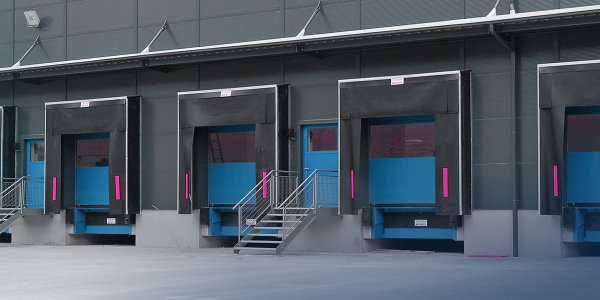
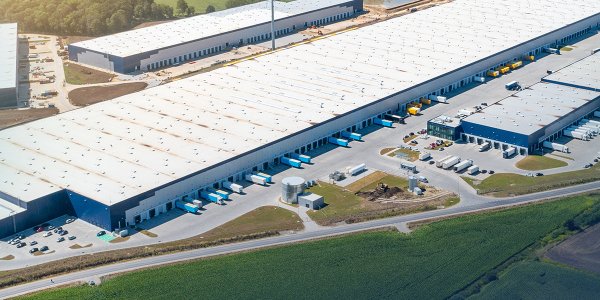
Imagine your yard as a small ecosystem: trucks coming in and out, trailers waiting to be loaded, containers being swapped, and a driver hurrying from one assignment to the next. If you lose control here, you lose time — and money.
This is where Task and Trailer Management in logistics comes into play. It brings structure, transparency, and digital control to your daily yard and site logistics operations — making every move count.
1. What Task and Trailer Management in Logistics Is All About
Task and Trailer Management is all about digitally planning, assigning, and managing internal transport processes in real time. Task Management means all operational activities in the yard — such as internal transport jobs, shuttles, or waste disposal runs — while Trailer Management comprises trailers, swap bodies, and containers that used and positioned efficiently.
The real power lies in the combination of the two. Instead of passively tracking trailers, you actively manage them. Digital planning helps you prioritize tasks intelligently, allocate resources dynamically, and optimize utilization across your site.
Typically, these processes are part of an integrated Yard Management System (YMS) that maps all yard movements — from appointment scheduling and gate control to departure. Combined with IoT sensors, mobile apps, and seamless connections to ERP, WMS, or TMS systems, it becomes a central command center for your site.
2. Why Logistics and IT Leaders Need to Act Now
In many organizations, yard and plant logistics are still surprisingly manual. Tasks are dispatched via phone or radio, trailer positions are recorded on paper, and locating a specific trailer often means driving around to find it. That’s not just inefficient — it’s expensive.
A digital Task and Trailer Management solution changes that. By decoupling tractors from trailers, you can significantly reduce turnaround times. Trailers are in place right when they’re needed, and drivers spend less time waiting.
You’ll also gain better resource utilization. Internal moves and lifting tasks become transparent and traceable, allowing dispatchers to manage capacity proactively rather than reactively.
Even more valuable are the data-driven insights you’ll get. Instead of relying on gut feeling, real-time data reveals where bottlenecks occur, which trailers sit idle, and how to optimize shuttle schedules.
Finally, Task and Trailer Management is a crucial step toward full digital transformation. With labor shortages, cost pressure, and sustainability demands increasing, relying on analog workflows simply isn’t an option anymore.
3. Real-World Scenarios – How Task and Trailer Management Works in Practice
Let’s make it tangible with two common examples.
Example A: A Production Site Managing Swap Bodies
A manufacturing plant with about 60 daily transports struggles with uncoordinated swap-body exchanges. Tractors stand idle because no one knows which body should go where. With digital Task and Trailer Management, things look very different:
- A driver automatically receives a task on their mobile app to move a swap body from Gate 3 to Warehouse 5.
- The system knows that a reach stacker is already available at that location and prioritizes the job accordingly.
- The next trailer is pre-cleared, so the tractor can immediately move on to the next task.
The result: shorter turnaround times, fewer empty runs, and a much more controlled yard flow.
Example B: A Carrier Yard Under Pressure
A logistics service provider operates a heavily used yard with dozens of internal moves per day. Without digital coordination, congestion and miscommunication are constant challenges.
With an integrated Task and Trailer Management solution, all internal transport and lifting tasks are recorded centrally and automatically dispatched. Drivers see their next job right on their tablet, while dispatchers get real-time visibility into trailer positions and availability.
The outcome: fewer delays, more transparency, and reduced workload for both dispatchers and drivers.
4. What Makes a Strong Task and Trailer Management Solution
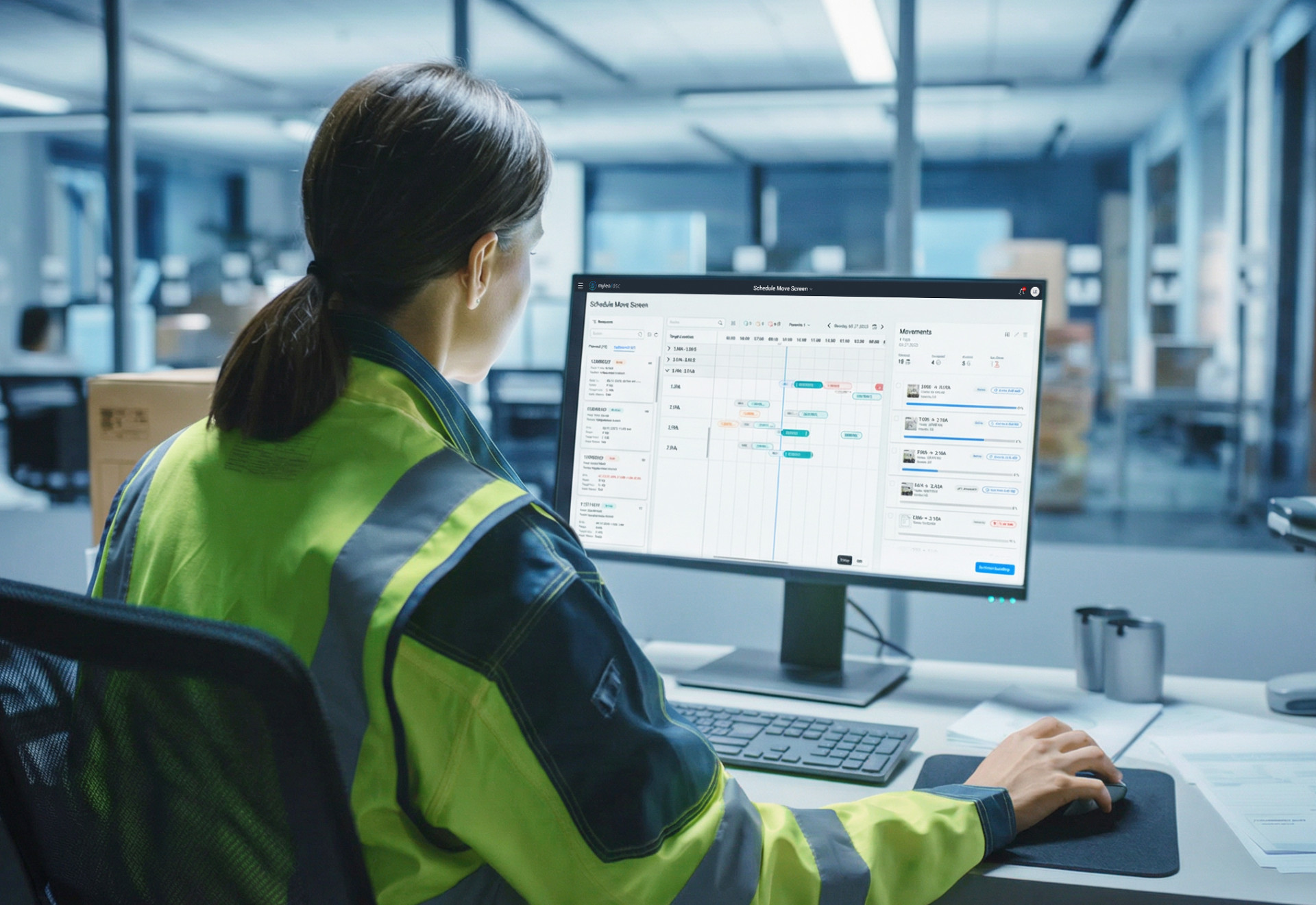
A modern Task and Trailer Management system consists of several key components. At its core is a digital task app that allows dispatchers and drivers to plan, assign, and execute internal transport orders intuitively — without radio calls or paperwork.
Equally important is Trailer and Resource Management. This provides real-time visibility into which trailers are standing where, which are being used, and which resources (e.g., tractors, forklifts, reach stackers) are currently available.
5. Three Steps to Fast Results
Digital transformation doesn’t have to be a massive, multi-year project. You can start small and see measurable results fast.
- Analyze Your Current State & Define Goals
Measure current turnaround times, trailer dwell times, and internal transports. Define clear KPIs — for example, “reduce trailer idle time by 20%” or “cut yard shuttle trips by 10%.” This helps you identify quick wins. - Run a Pilot Project
Start in one focused area — for instance, swap-body handling or waste logistics. Test the interaction between your task app, dispatch processes, and reporting. Collect feedback, fine-tune, and prove value before scaling up. - Scale & Integrate
Once the pilot works, roll out to more areas or sites. Integrate with existing ERP, WMS, or TMS systems to eliminate data silos and unlock further automation potential.
6. Conclusion – More Speed, Transparency, and Control in Your Yard
Task and Trailer Management in Logistics is more than a software feature — it’s a strategic enabler for modern logistics operations. Companies that digitally orchestrate internal tasks and trailer movements not only gain efficiency but also achieve greater flexibility and planning reliability.
Less idle time, better resource utilization, and full process visibility — all of this turns your yard into a high-performance hub. Because in logistics, it’s no longer about who moves the most freight — it’s about who manages it most intelligently.